Introduction: The Purpose of Fazenda dos Cordeiros
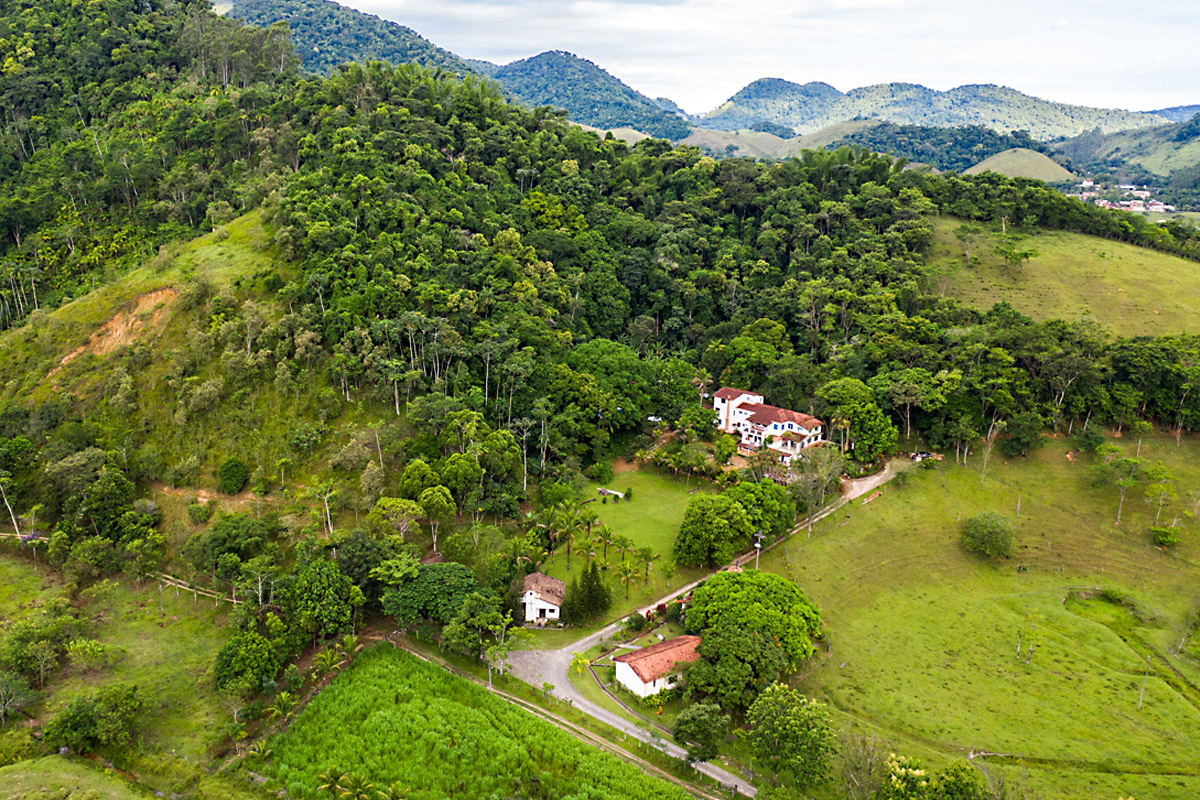
At Fazenda dos Cordeiros, EcoRural Tourism is more than an economic activity: it’s a deep reflection on the integration between humans, nature, and society. Inspired by complexity theory and Fritjof Capra’s ecological vision, we adopt a holistic approach that rejects fragmented thinking in favor of a global perspective. In a world of interconnected systems, our goal is to create experiences that unite unity and diversity, capturing the dynamic essence of sustainable rural tourism.
This vision reinforces the understanding of ecotourism as a process of integration, interaction, and self-organization. At the Fazenda, tourism reveals itself as ambivalent: sometimes an exotic and invigorating adventure, other times an immersion in rural routine marked by challenges and discipline. Thus, we promote a model that balances leisure and learning, adapted to the transformations of globalization, technological acceleration, and the leisure economy.
The Influence of Fritjof Capra’s Ecological Vision
Fritjof Capra, in his seminal work The Web of Life (1996), advocates for an ecological perception that transcends the mechanistic paradigm of Descartes and Newton. For him, the world is not a sum of isolated parts, but an integrated whole where all phenomena are interdependent and cyclical. “The ecological perception recognizes the fundamental interdependence of all phenomena and the fact that individuals and societies are embedded in the processes of nature” (CAPRA, 1996, p. 25).
This approach, aligned with Arne Naess’s “deep ecology” and 19th-century systems thinking, emphasizes that a system’s properties emerge from the relationships between its parts, not from intrinsic attributes. In the context of Fazenda dos Cordeiros, we apply these principles to contextualize EcoRural Tourism: a living ecosystem influenced by the natural, social, and cultural environment. This complex lens allows us to go beyond reductionist views, embracing the plurality and paradoxes of the sector.
Contemporary Demands: Leisure, Hedonism, and Self-Realization
In a world amalgamated by nature, technology, and capital, leisure demands evolve rapidly. Globalization and accelerated instability generate new cultural and philosophical identities, driving the search for personalized, intense, and authentic experiences. As Betrán (2003) points out, modern leisure is fueled by hedonistic, vitalistic, and self-realization components that generate excitement and ecstasy.
At Fazenda dos Cordeiros, we respond to these needs with activities that contrast or echo urban daily life. Visitors seek to escape routine, recharge energies, relieve stress, and enhance skills like flexibility and dynamism—essential in an unstable world. Partnerships with Silva Jardineiros expand this offering, creating itineraries that blend adrenaline and tranquility, promoting responsible tourism that values historical-cultural heritage and direct contact with nature.
Experiences at the Fazenda: Activities and Sensory Immersions
EcoRural Tourism at Fazenda dos Cordeiros is practical and transformative. Our activities include:
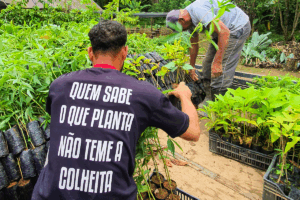
- Organic Agroforestry: Participation in Atlantic Forest seedling production, fostering environmental awareness.
- Wildlife Observation: Trails to spot birds and the iconic Golden Lion Tamarin in preserved habitats.
- Botanical and Sensory Walks: Explorations that stimulate the senses—smell, touch, sight, and hearing—in rich ecosystems.
- Rural Challenges: Experiences that test physical and emotional limits, such as manual harvests or remote explorations, balancing risk and discovery.
These practices are not mere distractions: they build new forms of embodiment, where the body is both means and end. They promote sociability among heterogeneous participants, inducing strong emotions and deep connections with the environment. As Swarbrooke et al. (2003) define, citing Millington et al. (2001), eco-rural tourism involves trips to exotic or wild destinations, with high levels of engagement, risk, and personal testing—elements that define our proposal.
Definition and Components of EcoRural Tourism
Defining EcoRural Tourism is challenging due to its contradictions and cultural variations. However, at the Fazenda, it takes shape as a leisure activity that unites action, space, and emotion: exploration in natural environments, challenges that expose visitors to controlled risks, and immersions that generate tranquility and adrenaline. It is an innovative niche, unburdened by traditional concepts, requiring active engagement and sensory exposure.
This definition encompasses the need for responsible tourism in Silva Jardim, Rio de Janeiro: practices that ally technology and nature, bring humans closer to the environment, and build inclusive sociabilities. While they do not exhaust the theme’s multiplicity, our initiatives signal paths for a plural and global sector.
Final Reflections: Toward Sustainable Tourism in Silva Jardim
Adopting the complex ecological paradigm, EcoRural Tourism at Fazenda dos Cordeiros transcends mercantilism (supply-demand) to embrace the phenomenon’s totality. We encourage practices that produce new embodiments, heighten the senses, and foster authentic emotions, responding to contemporary leisure’s idiosyncrasies.
We ask: what kind of tourism do we want for Silva Jardim? We need reflections, planning, and regulations that embrace the multiple, the undefined, and the interconnected. Fazenda dos Cordeiros invites everyone—tourists, academics, and communities—to co-create a sustainable future, where eco-rural is not just a trend, but a lifestyle integrated into the web of life.
Last Update on 12 de January de 2026 by Equipe de Comunicação