The Atlantic Forest, one of the world’s most iconic and biodiverse biomes, is a living legacy of Brazil that pulses with the essence of tropical life. Stretching from Rio Grande do Norte to Rio Grande do Sul, this forest harbors over 20,000 tree species—of which about 8,000 are endemic—and an equally impressive fauna, including iconic species like the Golden Lion Tamarin (Leontopithecus rosalia), the southern tamandua (Tamandua tetradactyla), the collared anteater (Bradypus torquatus), and hundreds of bird, reptile, and amphibian species. An unpublished study by environmentalists from MapBiomas indicates that only 25.8% of the Atlantic Forest’s forest cover remains preserved. According to data from the National Institute for Space Research (INPE), the biome has lost more than 88% of its area since the arrival of European colonizers. But amid this loss, hope emerges: sustainable reforestation, driven by initiatives like the A2 Nursery at Fazenda dos Cordeiros, is rewriting this story of degradation into a narrative of regeneration.
The Urgency of Reforestation: More Than Planting Trees—Reconnecting Ecosystems
Reforestation is not just a one-off action of “planting trees”; it’s a holistic strategy to restore degraded ecosystems, combat climate change, and promote socio-environmental resilience. In the context of the Atlantic Forest, where isolated forest fragments create vulnerable “islands” of biodiversity, reforestation aims to establish ecological corridors—strips of native vegetation that connect remaining areas, enabling species migration, seed dispersal, and pollinator flow. Studies from the SOS Mata Atlântica Foundation reveal that for every hectare reforested, up to 200 tons of carbon can be sequestered over 40 years, directly contributing to global warming mitigation.
Beyond climate benefits, reforestation strengthens essential ecosystem services. It regulates the hydrological cycle, purifying water and preventing floods in watersheds like the Paraíba do Sul River basin, which supplies millions of residents in Rio de Janeiro and São Paulo. It prevents soil erosion, reducing sedimentation in rivers and reservoirs, and fosters the green economy: restoration projects generate local jobs, boosting ecotourism and agroforestry. According to the United Nations Environment Programme (UNEP), investing in reforestation can yield returns of up to $30 for every dollar spent, through gains in biodiversity, public health, and agricultural productivity. In Brazil, goals like the Atlantic Forest Restoration Pact, which aims to restore 15 million hectares by 2050, rely on coordinated actions to overcome challenges such as the scarcity of quality seedlings and adaptation to degraded soils.
Native Seedling Nurseries: The Cradle of Sustainable Regeneration
At the heart of successful reforestation are native seedling nurseries, true living laboratories that transform seeds into robust saplings ready for the field. These nurseries don’t just produce plants; they preserve the genetic heritage of biodiversity, ensuring that replanted species are locally adapted to resist pests, droughts, and climate variations. Unlike exotic seedlings, which can invade ecosystems and reduce diversity, natives foster authentic ecological interactions, such as symbiosis with soil mycorrhizae and attraction of native pollinating insects.
The importance of these nurseries goes beyond production: they incorporate agroecological principles, such as the use of organic composts, natural shading, and drip irrigation to minimize water consumption. In Brazil, institutions like the Atlantic Forest Research Institute (IPMA) highlight that well-managed nurseries can increase seedling survival rates by up to 80% compared to traditional methods. They also serve as education and research centers, training rural communities in vegetative propagation techniques and post-planting monitoring. In a climate crisis scenario, where demand for native seedlings has grown 300% in the last ten years (data from Embrapa Florestas), these nurseries are pillars for scaling up large-scale restoration initiatives, integrating with public policies like the Floresta+ Program.
The A2 Nursery: Innovation and Passion for the Atlantic Forest at Fazenda dos Cordeiros
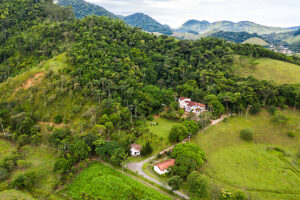
Nestled in the lush landscape of the Serra dos Órgãos in Rio de Janeiro, Fazenda dos Cordeiros stands out as an oasis of sustainable innovation. With over 200 hectares of preserved area and the Cachoeirinha and Rabicho da Serra Private Natural Heritage Reserves (RPPNs), the farm combines organic agriculture, EcoRural Tourism, and conservation, serving as a model of human-nature integration. It is in this context that the A2 Nursery shines: a specialized nursery for Atlantic Forest seedlings, designed to produce 100,000 seedlings per year. Inaugurated in 2006 as part of an investment in bioeconomy, the A2 Nursery adopts alternative technologies, including automated climate-controlled greenhouses, mycorrhizal fertilization, georeferenced mother tree banks, and seed orchards, among others, ensuring genetic quality and diversity essential for future restorations.
The process at the A2 Nursery is a tribute to nature’s patience: seeds collected from native mother trees are hand-processed, germinated in trays with inert substrates, and acclimatized for months before transplanting for proper hardening. Species like the Bahia rosewood (Dalbergia nigra), the woolly-handled ipe (Zeyheria tuberculosa), the sapucaia (Lecythis pisonis)—a national symbol in recovery—and the emperor fruit (Chrysophyllum imperiale) are prioritized for their rarity and contribution to ecological succession. Free of agrochemicals, the nursery aligns with the United Nations Sustainable Development Goals (SDGs), especially SDG 15 (Life on Land). Fazenda dos Cordeiros complements this mission with agroforestry orchards that integrate nursery seedlings with robusta coffee and native fruit crops, demonstrating how restoration can be economically viable and socially inclusive, employing people from the Imbaú community.
A Delivery That Plants the Future: 20,000 Seedlings for Cachoeiras de Macacu
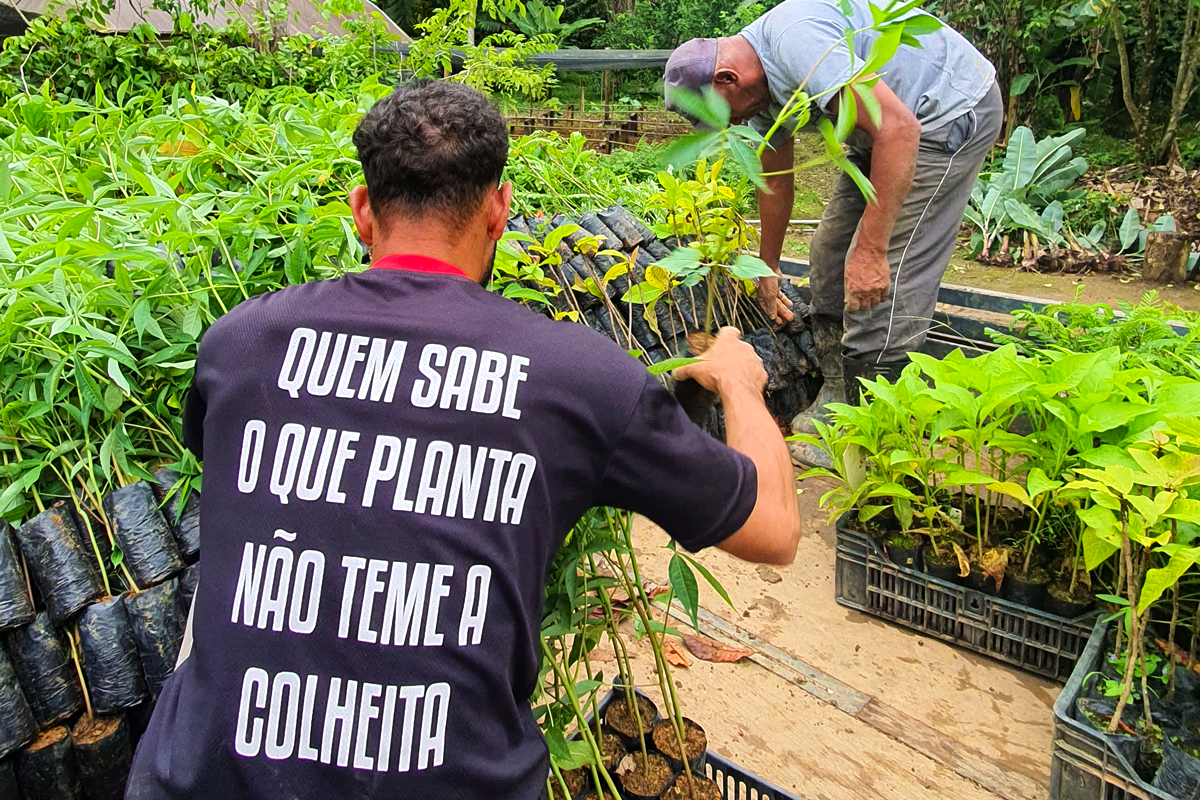
Recently, the A2 Nursery celebrated a tangible milestone of impact: the delivery of 20,000 native seedlings to Cachoeiras de Macacu in the interior of Rio de Janeiro, fulfilling a request from the International Institute for Sustainability (IIS). This shipment, loaded with the sweat and enthusiasm of farm collaborators, is destined for restoration projects in degraded areas around the REGUA (Guapiaçú Ecological Reserve), where historical deforestation has exposed soils to erosion and threatened water springs. Fazenda dos Cordeiros always keeps its gates open to strategic partnerships with organizations dedicated to conservation policies—this initiative not only expands the network of cooperation but also extends the idea of sustainable ecological corridors, so crucial for the future of restorations.
This delivery exemplifies the virtuous cycle of the A2 Nursery: from seeds to mature forests, each seedling carries the potential to restore the world.
Join the Mission: Visit, Learn, and Plant
The regeneration of the Atlantic Forest is not a distant spectacle; it’s an open invitation to all. Visit the A2 Nursery and Fazenda dos Cordeiros for a transformative immersion: experiences, practices, and guided tours, among other activities, reveal the behind-the-scenes of seedling production; workshops teach planting and native fruit harvesting techniques; and ecological trails connect visitors to the forest’s pulse. Ideal for families, schools, and companies seeking certifications, these experiences foster an emotional connection with nature, inspiring everyday actions like supporting carbon-neutral projects or conscious consumption.
Schedule your visit on the farm’s website and become part of this green revolution. Together, we can raise the remaining percentage of the Atlantic Forest to a future where biodiversity is not an inheritance, but a living legacy.
Last Update on 12 de January de 2026 by Equipe de Comunicação